Pages

Tuesday, June 26, 2012

Year over Year Gains

June 22 - Pending home sales in California were flat from April but posted double-digit gains from the previous year for the fourth straight month, the CALIFORNIA ASSOCIATION OF REALTORS® (C.A.R.) reported today. Additionally, the share of distressed sales continued to decline from year-ago levels, signaling a return of non-investors to the housing market.

 “Despite a slowdown in economic growth ...in recent months, sales in California remain strong as record low mortgage rates and favorable home prices continue to fuel demand in the housing market,” said C.A.R. President LeFrancis Arnold. “The strong results in pending sales – double-digit year-over-year gains in the last nine out of 10 months – suggest solid housing market performance for the state in the upcoming months.”
Full Story: http://www.car.org/newsstand/newsreleases/2012releases/mayphsi

Wednesday, June 6, 2012

Home Prices Increase Month over Month in April

Home prices, including distressed sales, rose 2.2 percent in April on a month-over-month basis, marking the second consecutive month-over-month increase this year, according to a report by CoreLogic.Excluding distressed sales, prices increased 2.6 percent compared with March.  The CoreLogic Home Price Index (HPI) also shows that year-over-year prices, excluding distressed sales, rose 1.9 percent in April compared with the prior year. Distressed sales include short sales and real estate owned (REO) transactions.

Full Story: http://www.corelogic.com/about-us/researchtrends/home-price-index.aspx?WT.mc_id=MarHPIJanData_crlg_1e_hpr_1_120307

Friday, May 25, 2012

Encouraging Headlines...

Why this may be the ideal time to buy real estate
http://moneyland.time.com/2012/05/21/why-this-may-be-the-ideal-time-to-buy-real-estate/

Home sales surge in April
http://money.cnn.com/2012/05/22/real_estate/home-sales/index.htm?iid=HP_LN

Reports: Sellers boosted prices in April
http://blogs.wsj.com/developments/2012/05/16/report-sellers-boosted-prices-in-april/

Foreclosure activity sinks to a five-year low
http://articles.latimes.com/2012/may/17/news/la-foreclosure-activity-sinks-to-a-five-year-low-20120517

Home prices rose most in two decades in March
http://sfgate.ldc.bloomberg.wallst.com/SFChronicle/Story?docId=1376-M4FZA66VDKIX01-1U3J4A48C72LJOLUO1B6P26SFG

Tuesday, May 15, 2012

Defaults and Foreclosures Decline...

Foreclosures in California dropped again in the first quarter of 2012 — a good sign of a stabilizing housing market. Notices of default (NODs) and real estate owned (REO) resale volume also declined, suggesting that lenders are finally working through their backlogged foreclosure inventory. As a result, locally, we are experiencing a large drop in inventory creating an artificial increase in property values. Hopefully the trough in the market is behind us and remains there. We shall see....

Thursday, May 3, 2012

A Flicker of Hope Appears in the Housing Market

THE boom in housing in the middle of the last decade created a huge oversupply of homes in the United States. But now that oversupply appears to be close to vanishing, at least in most parts of the country. Full Story: http://www.nytimes.com/2012/04/28/business/economy/a-flicker-of-hope-appears-in-the-housing-market.html?_r=2&ref=realestate

Friday, April 27, 2012

It’s safe to sell your home again?

While analysts debate when the housing market will hit bottom, for a surprising number of cities the turnaround has already begun. In December, prices rose in 109 of the 384 metro areas tracked by data firm CoreLogic. Making sense of the story There are certain signs to help determine if a particular neighborhood is on the verge of a rebound. For instance is local employment on the upswing? That’s a critical factor for a region to get itself on the path to recovery. Improving jobs picture has led to shrinking housing stock across the country, as investors and bargain hunters have started buying up foreclosures that have been preventing a recovery. For years, buyers were scared of overpaying for a home, but less so now. Many buyers have grown accustomed to thinking they’ll score deals, so they tend to act slowly, and typically start bidding around 10 percent to 15 percent below list price. However, a growing number of buyers are beginning to realize that if they wait too long in this market, they may miss out. Sellers can hold firm on price if they’re patient. The days of having to deal with low-ball offers are coming to an end. The higher the price, the more patient the seller must be. Cheaper homes are affordable to more buyers and appealing to investors, so recoveries usually start there. Sellers should keep in mind that while they don’t have to placate low-ball offers anymore, they also can’t shoot for the moon either. Working with a REALTOR® and setting a realistic price from the get-go is key. Sellers should know what they’re competing against. Homeowners should let their home’s value dictate the price. While this may seem self-evident, some owners may have lost sight of it during the bust. On the one hand, some sellers clung to the false hope of a return to boom prices, so they set prices unrealistically high. Others may have gone too far the other way, and set their price too low. It’s also important that sellers understand they’re no longer competing with gutted foreclosures. Buyers are tired of looking at worn-down, neglected, distressed properties and often don’t have much extra money to do a lot of fixing up. REALTORS® often report their clients are willing to pay a little more for a home that’s ready to move into. Full Story: http://money.cnn.com/2012/04/19/real_estate/housing-market.moneymag/index.htm?iid=HP_River

Saturday, April 21, 2012

First gain for Calif. prices in 16 months

The median price for an existing, single-family home in California rose 1.6 percent in March compared with the year before, marking the first year-over-year increase in 16 months, the CALIFORNIA ASSOCIATION OF REALTORS® reported Monday.

Full Story:http://www.ocregister.com/articles/median-349624-statewide-months.html

Monday, April 9, 2012

As Rents Increase Home Ownership Becomes More Attractive

Rising rents, coupled with slumping home prices and interest rates near record-lows, are boosting demand for homes at entry-level prices.

Making sense of the story
Increased buying activity from investors and second-home purchases may be factors behind the recent pickup in home sales, but real estate agents say they are fielding more calls from anxious tenants complaining about rising rents.
Average apartment rents rose by 2.7 percent last year, while the national vacancy rate dropped below 5 percent for the first time since 2001, according to a quarterly survey released Wednesday by REIS Inc., a real estate research firm.
The largest rent increases came in San Francisco and San Jose, Calif., which saw increases of 5.9 percent and 4.9 percent, respectively. Such increases are one reason why industry analysts believe 2012 will be the first year since 2005 when the share of apartment renters that moves out to buy a house increases from the previous year.
Historically, the cost to rent an apartment has been about 10 percent lower than the after-tax cost of owning a home. That rental discount began to fall in 2010 and disappeared entirely last year, according to analysts at Deutsche Bank who track housing costs. By the end of 2011, the bank’s research found that the cost to rent an apartment was about 15 percent higher than the cost to own a home.
It isn’t always easy for home buyers to make it to the closing table though. Lending and appraisal standards remain tight, keeping many would-be buyers out of the market. And aspiring buyers are competing with savvy investors who have turned buying and reselling foreclosed homes into a business.

Read Full Story: http://online.wsj.com/article/SB10001424052702304750404577322011443831768.html?mod=WSJ_RealEstate_LeftTopNews

Friday, March 23, 2012

Elusive Bottom Near?

Improving economic data and government-policy developments have led Bank of America/Merrill Lynch to call for the long-awaited bottom in housing prices this year.

The firm tweaked its forecast from November, when it expected home prices to fall 3.5% in 2012. Now, it expects a modest gain of 0.5%, a good sign for the sector that continues limping through its worst downturn in generations.

Still, “along with the earlier bottom is a slower recovery,” the firm warns. It expects home prices to gain 2.8% in 2014, solidly below its prior estimate of 8.1%. Its prediction for 2020 remains roughly the same, when it expects beaten-down home prices to have recovered by 42%.

full story: http://blogs.wsj.com/developments/2012/03/22/elusive-bottom-for-home-prices-near-forecast-says/?mod=WSJBlog&mod=WSJ_Real%20Estate_BLOGSDEVELOPMENTSFEED

Wednesday, February 29, 2012

HARP 2 – A refinance plan that might work?

HARP 2 is a revision of the Home Affordable Refinance Program (HARP), whose original goal was to allow homeowners to refinance their loans, even if they owed more than their homes were currently worth. HARP was introduced in 2009, and it was designed to help homeowners with mortgages owned by Fannie Mae or Freddie Mac. The program let borrowers refinance at up to 125 percent of their homes' current values. For example, under HARP, if you owed $125,000 on a house that was now worth $100,000, you could qualify for a HARP refi, because your loan was 125 percent of the home's value. But if you owed more than 125 percent of the home's value, you were out of luck. For most Californians, we were those described as out of luck.

However, the 125 percent loan-to-value limit has been eliminated under HARP 2. Under new rules in HARP 2 there is no loan-to-value limit on HARP refis -- at least, for borrowers who have fixed-rate mortgages.

The elimination of the loan-to-value limit is the biggest change under HARP 2. Here is a summary of HARP 2's guidelines:
•The program is for borrowers whose mortgages are owned by Fannie Mae or Freddie Mac, and who got their loans before May 2009. ***loan lookup at: http://www.makinghomeaffordable.gov/get-assistance/loan-look-up/Pages/default.aspx
•HARP had been scheduled to expire at the end June 2012; HARP 2 extends the expiration to the end of 2013.
•There is no loan-to-value cap for borrowers who now have fixed-rate mortgages.
•For borrowers with ARMs, the loan-to-value cap remains 105 percent.
•Borrowers can qualify for HARP 2 refis if they have paid on time for the last six months and have no more than one 30-day late payment in the last 12 months. Originally, HARP didn't allow any delinquencies in the last 12 months.
•Fees have been reduced. Lenders are fond of adding fees to loans that have an added amount of risk. Fannie and Freddie call these fees "loan level price adjustments," and the charges easily can climb to 2 percent of the loan amount on HARP refis. Under HARP 2, the fees are reduced to zero percent on loans for 20 years or fewer, and 0.75 percent for mortgages for more than 20 years and for ARMs.

The new program, in many cases, will virtually eliminate the risk that lenders will have to pay for losses on either the existing or the refinanced loan under HARP 2. This could be a big incentive for lenders to refinance loans, especially ones they already own.

But there are still many questions about the program, such as what interest rates banks will charge, whether they will impose additional fees or underwriting requirements beyond what Fannie and Freddie require and whether investors will be willing to buy securities backed by these new HARP 2 loans in the secondary mortgage market.

While borrowers will clearly benefit, the losers will be investors who own the guaranteed loans that are refinanced. They will be repaid, but will have to reinvest their proceeds, probably at a lower rate. These investors include Fannie and Freddie, the U.S. Treasury and the Federal Reserve - in other words, U.S. taxpayers. The hope is that taxpayers as a whole will benefit if homeowners who lower their monthly payments under the program spend some of their savings (thus boosting the economy) and become more likely to stay in their underwater homes and not default. (***For those considering a refi please keep in mind that a refi removes the non-recourse protection that their original purchase money loan provides in the event of a foreclosure. In other words, the bank can pursue a deficiency judgement after a foreclosure on a borrower that participates in any refinance so please make sure you weigh your future circumstances and likelihood of being able to stay in the home long-term prior to participating in a refinance and consult an attorney)

As Realtors® we obviously don’t receive any direct benefit from HARP2. But we continue to feel that by “helping first” we may someday be remembered when your real estate needs require the services of a trusted professional. We are happy to field questions and assist in any way possible. Please contact us if there’s something that we may do for you.

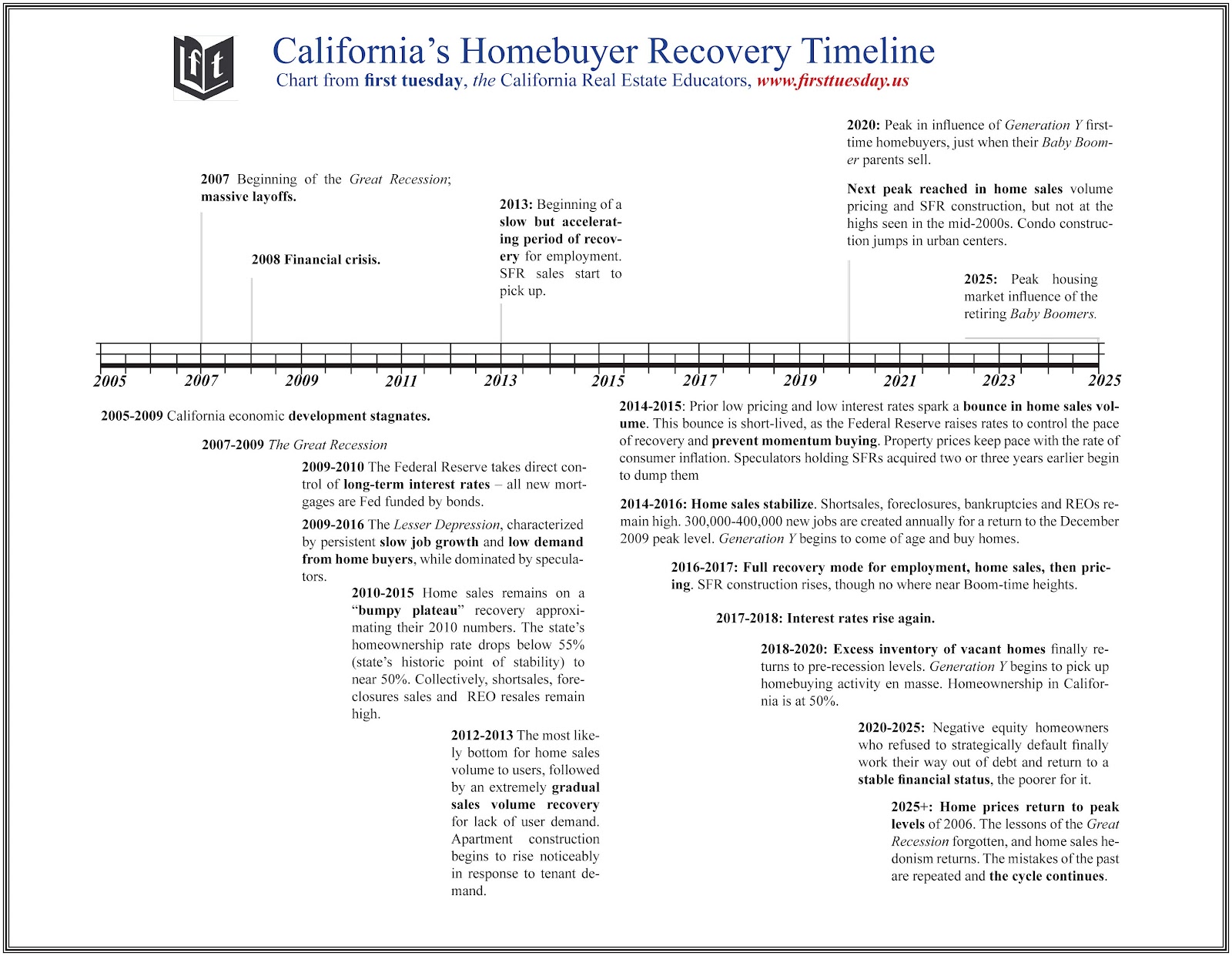
Wednesday, January 18, 2012

Short Sale then Immediately Purchase? - YES

As a Realtor who has been heavily involved negotiating short sales over past years, one of the questions that I get asked quite often from potential short sale sellers is, “How long will it take before I will be able to buy a home again?” The answer to this question is specific to the seller and does not have any clear cut answer as there are quite a few variables to consider when figuring when someone will be able to purchase a home after a short sale. However, there exists a misconception of sorts in the real estate market in that a short sale will prevent a subsequent home purchase for at least two years. While this is true in some circumstances we wanted to take a few moments this month to highlight a program backed by the FHA that will allow a home purchase directly after a short sale.

The biggest guideline that must be met to enable you to participate in this program is that you MUST remain current on your mortgage, including no late payments, and on any installment debt payments (credit cards, car loans, etc). If, within the past 12 months of your new purchase loan application date, you have not been late on your mortgage or any installment debt payments then you may be eligible for an FHA loan for purchase.

Now I understand that for some this may be difficult as oftentimes a short sale results from the inability to make the payment in the first place. But for those who have been making their payments and have just experienced or are anticipating a hardship (reduction of income, medical expenses, job relocation, job loss, etc.) this program provides the opportunity to purchase again directly after your short sale.

Another criterion that will be examined is your credit score (and this is the second most popular question I get in regards to short sales and foreclosures). To be eligible for this program you must have a 620 FICO after the short sale is completed. This is a difficult metric to guestimate as credit scoring factors vary from individual to individual. The scoring change is heavily dependent on where the credit score was before the negative event took place and oftentimes those in a higher starting position fall the farthest. According to FICO the average score will drop from 85-160 points with the more extreme examples from 200-300. However, if you remain current on your mortgage during the short sale process then you will not experience the effect that monthly missed payments and delinquencies will have on your credit score – a win-win scenario.

Thursday, December 15, 2011

Market Prediction - 2012

This time of year I oftentimes get asked the question “What do you think will happen to the real estate market next year?”. I thought I’d take a moment and let you know my thoughts on where we are and where we might be headed in the not so distant future.
With the Euro in question, a U.S. presidential election and a sizable (and arguably unknown) portion of inventory being controlled by banking institutions it is very difficult to hypothesize what will happen to our local market. What we can do is look backwards and note that real estate prices generally went down across the board in 2011. On average, prices fell by around 5.6 percent over the year, with the national average house price sitting at $170,000. While it’s not been a great year, the downturn has slowed somewhat, indicating a possible momentum shift which could swing the price of real estate upwards. Unemployment continues to dampen our local economy with most recent figures reporting 15.7% for our county. A survey conducted by HouseLogic.com asked the question “What issue/ area will have the greatest impact on your vote in 2012?”:
Jobs/unemployment – 54% Housing – 27% National security – 8%
Healthcare – 4% Energy/Environment – 2% Other – 4%
It is very clear that the focus of America is on employment. With an improvement in jobs will come consumer confidence and an increased participation in the purchase of housing. But until then we will continue to face a difficult and constricted real estate market. It is my belief, however, that we are nearing the bottom. We will likely continue to see small decreases in values, with sporadic months reporting no change, through the first two quarters of 2012. The third quarter of 2012 is when I might anticipate we look backwards and notice the trough of the market has passed with a very gradual but consistent upward trend continuing into 2013.
Currently low values coupled with historically low interest rates maintains a huge buying incentive - now is the time to buy. "Housing affordability conditions, based on the relationship between median home prices, mortgage interest rates, and median family income, have been at a record high this year," said Lawrence Yun, Chief Economist and Senior Vice President of Research for the National Association of REALTORS®. "Very favorable affordability conditions will dominate next year as well, which will probably be the second best year on record dating back to 1970."

It is my sincere hope that 2012 will bring us some much needed change and upward swing in both our economy and the housing market. My sights are set on the third quarter…

Sunday, November 6, 2011

Mortgage Rates Hit New 40 Year Low

Investor worries over the European debt crisis helped drive the average rate for a 30-year fixed home loan down to 4% this week, according to Freddie Mac.

The figure, down from 4.1% last week, was the second lowest in the 40 years Freddie has been conducting a weekly survey of the terms being offered by home lenders. The lowest average rate recorded was 3.94% four weeks ago.

Freddie Mac said lenders were offering 15-year loans, a popular choice for homeowners who are refinancing, at an average rate of 3.31%, down from 3.38% a week earlier. That rate was below 3.3% for three weeks in late September and early October.

To obtain the loans at the rates being offered this week, a borrower would have to pay upfront fees averaging 0.7% of the amount borrowed.

Worried about the possibility of defaults on European debt, investors rushed to buy U.S. Treasury securities early this week, driving down interest rates.

The low mortgage rates have created an opportunity for some homeowners who are current on their loans to trade them in for new mortgages, often lowering their interest costs dramatically.

http://latimesblogs.latimes.com/money_co/2011/11/mortgage-rates-freddie-mac.html

Wednesday, October 26, 2011

Smoke Detectors – You Need to Know the Differences

Like most, I have always believed that smoke alarms were pretty much the same. After all, every smoke alarm sold is required to be tested and approved. The smoke alarms most of us have at home are either Ionization or Photoelectric type alarms. I have recently learned that the reality is that all smoke alarms are not the same. In real-world fires, these two types of alarms will react very differently and knowing the difference could very well save your life.
Back in the 1970’s, smoke alarms were not commonly used in homes. Back then, the residential fire death rate was about 7 to 8 fatalities per 1,000 US home fires. Between the 70's and now we have installed hundreds of millions of smoke alarms in US homes. Yet today, our chances of dying in a fire still hover around 7 or 8 deaths per 1,000 home fires. Clearly, something is wrong here.
The smoke alarm marketers tell us that the alarms are the same and more recently that we should have both types. It is true that an ionization alarm responds marginally faster to an open or "fast-flame" fire than a photoelectric smoke alarm. On average, ionization alarms will react about 30 to 90 seconds faster to this type of fire. However, nearly 100% of residential fire fatalities are from smoke inhalation and not from the actual fire. Most deadly fires occur at night while you sleep. On average, ionization alarms respond about 30 to 90 minutes slower to smoldering fires than a photoelectric alarm. In these fatal fires, a photoelectric alarm will alert occupants in time to allow a safe exit about 96% of the time. Ionization alarms will generally give sufficient warning less than 40% of the time, meaning 60% of the time someone may die. The problem with ionization alarms isn't just their slow response times. Ionization alarms nuisance trip when you cook, shower, etc. People become frustrated and intentionally disable them, leaving their family completely unprotected. About 2/3's of all residential fire deaths occur in homes that are unprotected. Ionization alarms account for over 85% of disabled alarms. Most of the remaining fire deaths occur in homes where an alarm sounds, but it sounds too late for the occupants to escape. For Ohio fathers Dean Dennis and Doug Turnbull, the battle over ionization alarms is very personal. Both lost daughters in separate Ohio college off-campus housing fires. Those fires claimed a total of eight lives, There were around twenty smoke alarms between those two fatal fires. Some alarms had no batteries, none of the functional alarms responded, all were ionization alarms. Dean and Doug founded Fathers for Fire Safety as a way to educate the public and fire service about this critical issue. This group works closely with the World Fire Safety Foundation, an organization that has been instrumental in educating the fire service community and general public about this critical issue.

There is significant university and government research - some going back to the mid-1970's - clearly showing that ionization alarms are slow to react in smoldering fires. It has taken decades, but there is finally a growing public awareness of this issue. Recently, the International Association of Firefighters (IAFF) took a stand and now recommends that only photoelectric smoke alarms be installed. In July, 201O, the City of Albany, California became the first city in California to require photoelectric smoke alarms in new construction and remodels. In late 2010, the cities of Palo Alto and Orange enacted ordinances requiring photoelectric technology alarms, In January 2011, the City of Sebastopol enacted an ordinance requiring photoelectric technology.
Which Ones Do I Have? It is not always possible to know. In general, if the alarm has a "Hush" feature, it probably an ionization unit. If the label says anything about radioactive material, Americium-241 or the model number has an "I" in it - then it is probably an ionization alarm. If there is any doubt, there is a 95% chance the alarm is an ionization unit. To be safe, simply replace any unknown units with photoelectric alarms.
What About Combination Alarms? There are combination photoelectric/ionization units available. These units have the same issues as ionization only detectors. In some cases - they may actually be worse. They can nuisance trip due to the ionization detector. Some manufacturers appear to have reduced the smoke sensitivity/response of combination units as a way to cut nuisance tripping. There are design issues with certain combination alarms that actually make them less effective than photoelectric only alarms. The International Association of Fire Fighters (IAFF) specifically recommends against installing combination alarms. There are also combination photoelectric/carbon monoxide (CO) alarms. For safety reasons, smoke alarms should be replaced every 10 years. CO detectors should be replaced every 5 to 7 years. With combination units, you are either replacing the smoke alarm portion too soon or relying on a CO detector that is past its replacement date. Combo units are also more expensive. Separate units make more sense. Every year, about 1,000 people die needlessly in residential fires and thousands more are seriously injured. It is critical that public awareness of this issue become the top priority for each of us. Photoelectric alarms provide the best protection in real-world fires that we have available today. And they cost only a few dollars more.